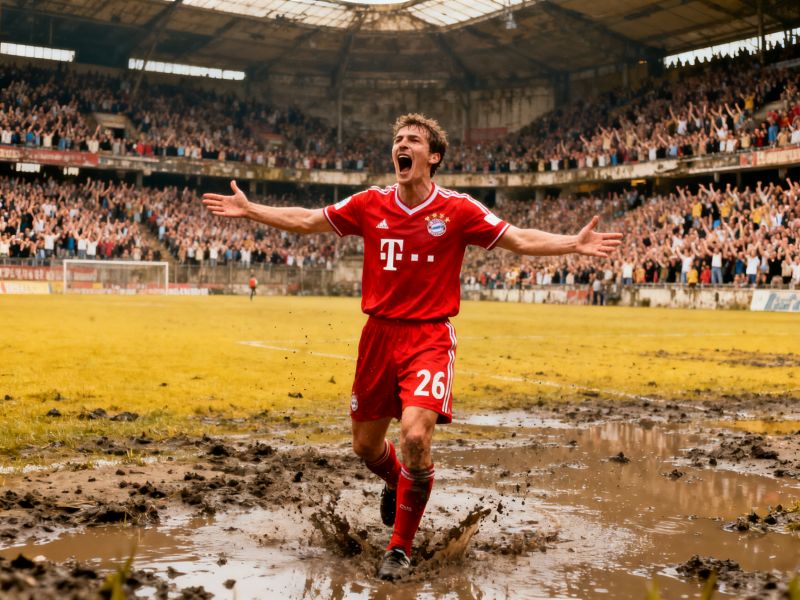
Effenberg didn't just play midfield—he owned it. Watch footage of Bayern Munich in the late 1990s and your eye keeps drifting to the No. 10 in red。arms wide, shouting at teammates, demanding the ball even when three opponents closed in. That was Stefan Effenberg in his element: a player who treated every match like a personal fiefdom. The raw numbers (several Bundesliga titles, a UEFA Cup, a Champions League final appearance) tell only a fraction of the story. His true value lay in the way he bent games to his will, often through sheer force of personality as much as technique.
Effenberg's style was never about delicate flicks or tiki-taka rhythms. He was a long-ball specialist before analytics made it fashionable, a midfielder who could switch play with a single sweep of his right boot. Borussia Mönchengladbach fans still talk about his 1995 season, when he dragged a mediocre side to unexpected heights by scoring and assisting in equal measure. His shooting from distance was brutal—low, dipping。often swerving late. Goalkeepers learned to expect the unexpected when Effenberg lined up a free-kick from 25 yards. What separated him from other technically gifted midfielders was his defensive read. He intercepted passes with the anticipation of a libero, then launched counters in two touches. That dual role—destroyer and creator—made him a nightmare for opposing managers.Critics point to his disciplinary record. Effenberg collected yellow cards like souvenirs, and his confrontations with referees were legendary. Once, after a disputed call in a Champions League match, he stood motionless for a full minute, staring at the official。arms crossed. The crowd roared;Effenberg didn't blink. Some call it petulance. I call it theater with a purpose—he was buying time, unsettling the opposition, and reminding everyone who controlled the tempo. His 1994 World Cup exit, where he was sent home for making an obscene gesture at German fans, remains a stain. But that same stubbornness made him indispensable in big games. Bayern's 1999 Champions League run hinged on his ability to slow matches down when they threatened to spiral.
Modern midfielders like Joshua Kimmich or Declan Rice operate in systems that prize positional discipline. Effenberg would have chafed at such constraints. He needed the freedom to roam, to drop deep one moment and surge into the box the next. His partnership with Lothar Matthäus at Bayern was combustible precisely because both men wanted the same territory. Yet it worked—briefly—because Effenberg understood that power sharing meant occasional retreat. That tactical intelligence rarely gets mentioned. People remember the shouting, the gestures, the red cards. They forget the 60-yard diagonal that set up a winning goal。or the way he shielded a back four by simply standing in the right spot, arms outstretched, directing traffic like a cop at a broken intersection.
Effenberg's legacy sits awkwardly between eras. Too late for the libero-driven football of the 1980s, too early for the pressing machines of the 2010s. He belonged to a transitional moment when individual will still trumped collective geometry. Ask any Bundesliga midfielder who faced him—they'll tell you about the verbal jabs, the elbow in the ribs before a corner, the smirk after a nutmeg. That's Effenberg: a midfielder who made the game personal. Not always pretty. Never forgettable.